Skip to content
Truecut
Cart0

Rörelser / movement definitions and method

Every number, and how we got it

A figure is only useful if you know how it was taken. This page defines each of the five figures we publish, sets out exactly how it is measured, and says plainly what it does and does not tell you.

Measured on a 165 cm wearer in size 38. Yours will differ.

The measurement basis

Every movement figure on this site was taken on the same person: 165 cm tall, wearing size 38. That is deliberate. If we mixed wearers between garments, the figures would not be comparable with each other, and comparing them is the whole point.

It also means the figures are not a promise about you. A longer femur changes squat depth. A longer arm changes where a pocket needs to be. Read the figures as a way to compare our garments against each other, and read the finished measurements on each product page to work out what will happen on your body.

Wearer height
165 cm
Garment size
38
Hold time for a squat
5 s
Figures estimated from a pattern
0

Five figures

Definitions

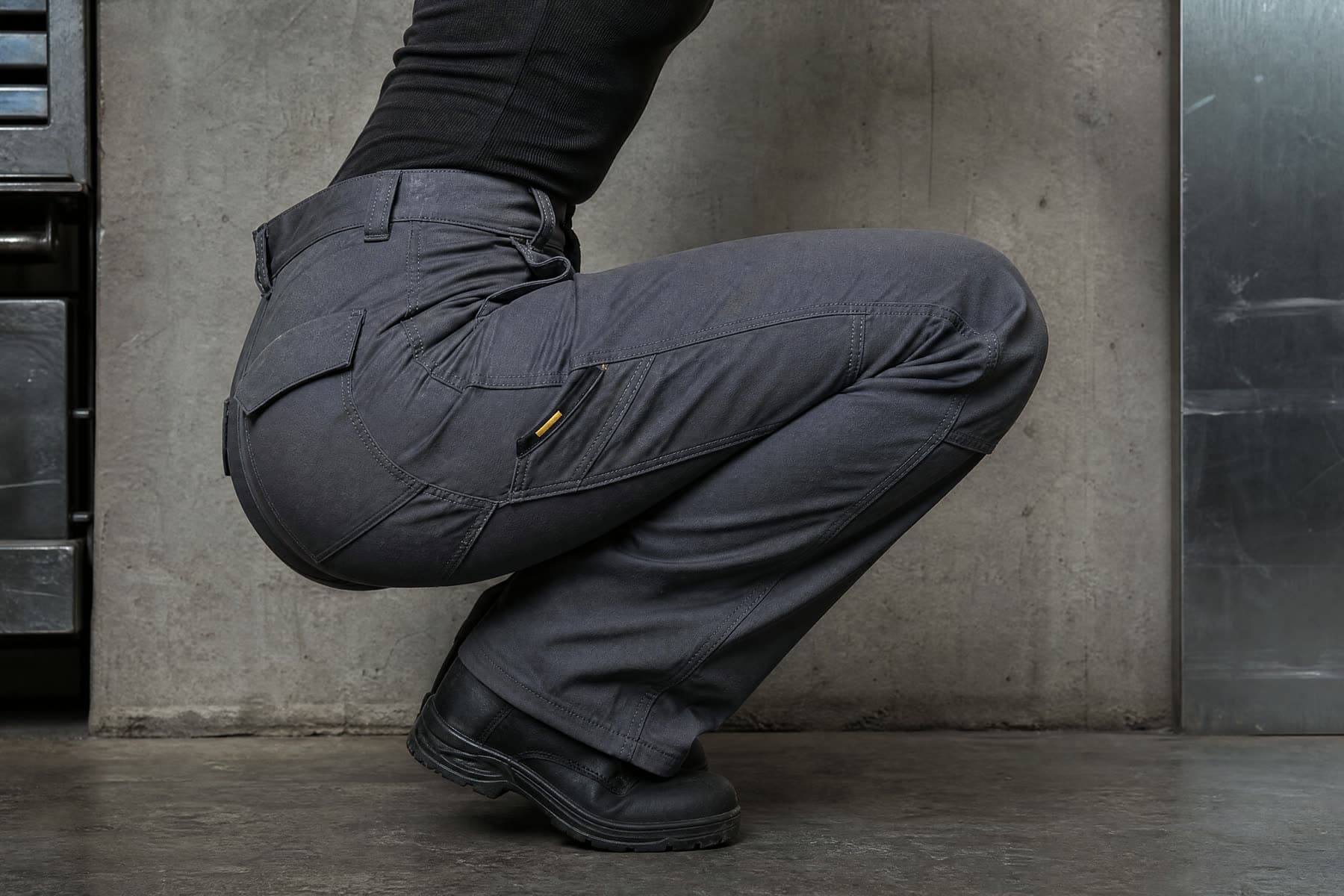
Side profile of a deep squat in work trousers, the waistband staying flat against the back.

Squat depth

cm

The vertical distance from the hip crease to the floor at the lowest point of a squat that the wearer can hold for five seconds, with both heels flat and the waistband not pulled up by hand.

How it is taken

  1. 1.Wearer starts standing, heels flat, feet at shoulder width.
  2. 2.Lowers until the garment stops them, not until their body does.
  3. 3.Held for five seconds. If the waistband has to be pulled up, the attempt does not count.
  4. 4.Measured at the hip crease with a rigid rule against a wall.

What it tells you

Squat depth tells you whether you can get down to floor level without the trouser pulling you back up. It is the single figure most people notice first.

Kneeling on one knee, the knee panel of the trousers folding and slack rather than pulled tight.

Knee allowance

cm

The amount of slack fabric left across the front of the knee panel when the wearer is kneeling on one knee, measured as the difference between the fabric length across the bent knee and the straight-leg length at the same point.

How it is taken

  1. 1.Wearer kneels on one knee on a hard floor.
  2. 2.A tape is laid over the knee panel following the fabric, not the leg.
  3. 3.The straight-leg reading at the same point is subtracted.

What it tells you

Zero allowance means the trouser is pulling on your knee every time you kneel, and it means the knee panel is under tension every time — which is also why it is usually the first place to go.

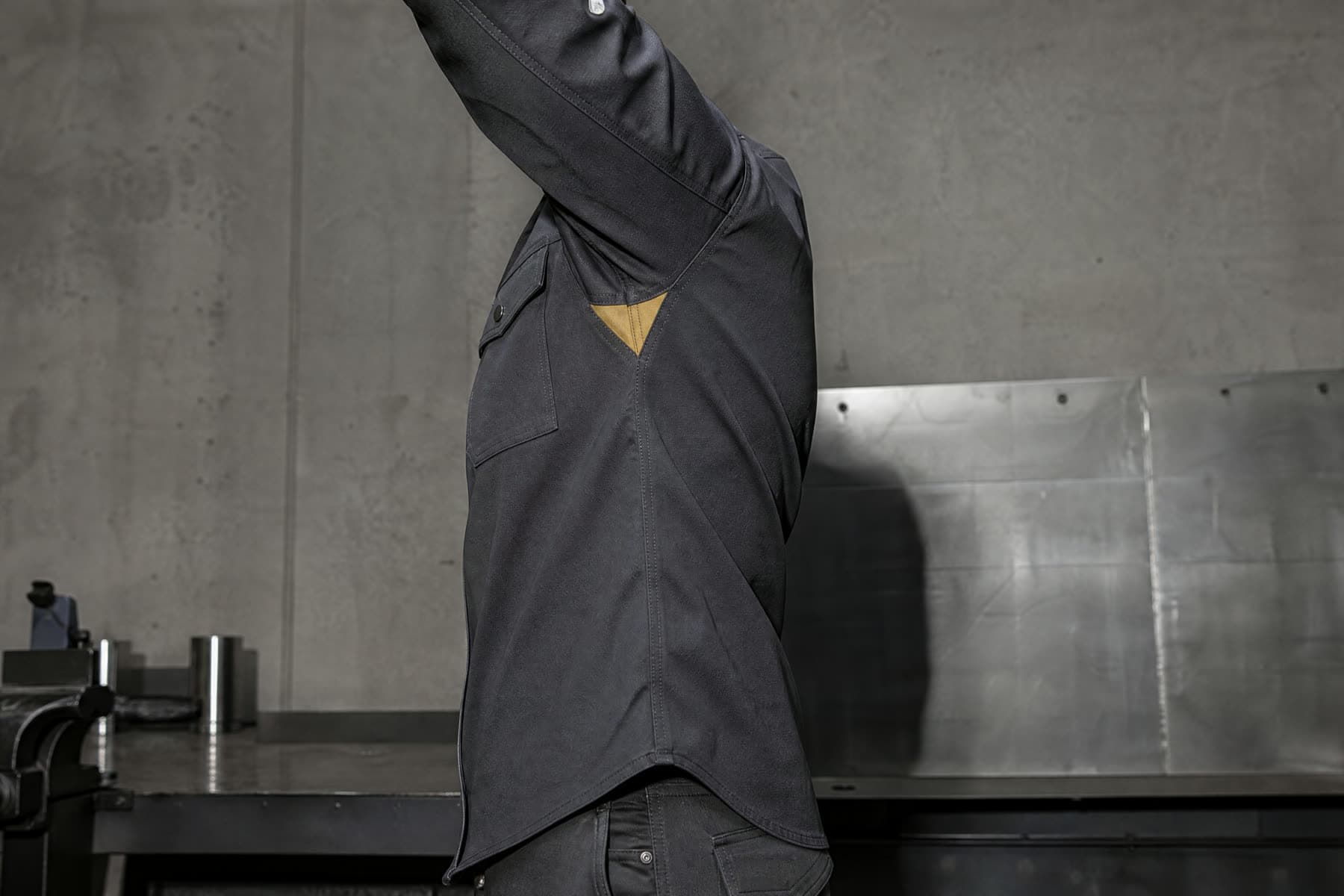
One arm raised fully overhead in a work shirt, the underarm gusset visible and the hem staying at the hip.

Overhead reach

°

The angle between the torso and the upper arm at the point where the garment hem begins to lift away from the waist, measured on the raising arm.

How it is taken

  1. 1.Wearer stands square, shirt tucked at the start.
  2. 2.One arm is raised slowly through the side plane.
  3. 3.The angle is read at the first movement of the hem, not at the end of the range.

What it tells you

Almost any shirt lets you raise your arm. The question is what the rest of the shirt does when you do — most of them lift out of the waistband, which is why you keep re-tucking.

The upper back of a work shirt with two deep vertical box pleats running from the yoke.

Back movement

cm

The extra width released across the shoulder blades when both arms are brought forward, measured between two fixed points on the yoke seam.

How it is taken

  1. 1.Two marks are set on the yoke seam, 20 cm apart, with the arms at rest.
  2. 2.The wearer brings both arms fully forward.
  3. 3.The new distance between the marks is measured; the difference is the figure.

What it tells you

This is the figure that decides whether reaching forward pulls the shirt tight across your back. A pleated back releases it; a plain back does not.

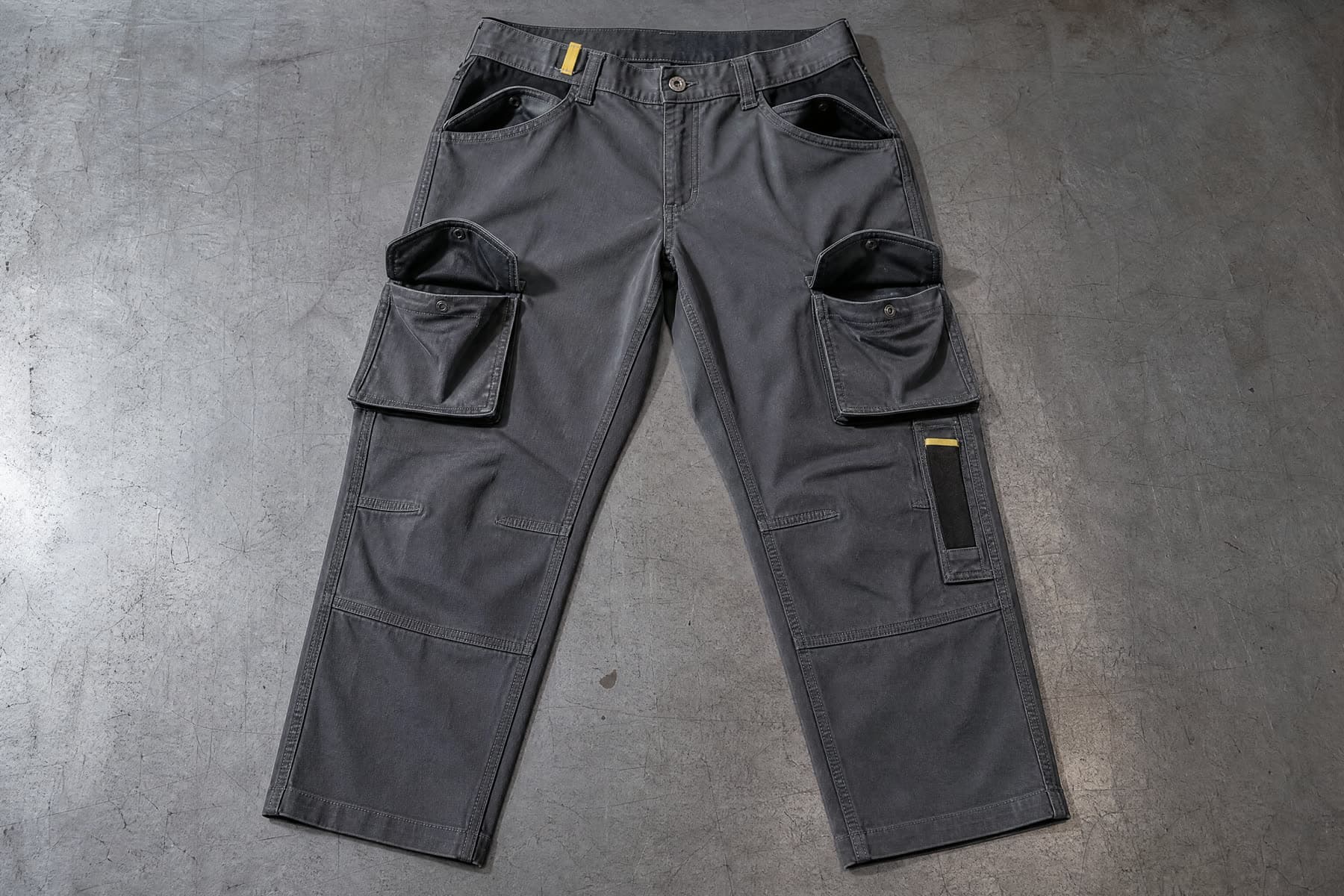
Work trousers photographed from directly above with all pockets open, showing the layout across the garment.

Pocket position

cm

The vertical distance from the waistline down to the centre of the pocket opening, with the garment laid flat and square.

How it is taken

  1. 1.Garment laid flat, waistband straightened, no tension applied.
  2. 2.Measured from the lower edge of the waistband to the centre of the opening.
  3. 3.Pockets above the waistline, such as chest pockets, are recorded as a distance above it.

What it tells you

Pocket positions are set for a 165 cm frame. Scaled-down men's patterns put them where a shorter arm can't reach.

Reinforcement, and its limits

Where it gives up first

Reinforcement moves the problem; it does not remove it. Doubling the knee panel means the abrasion has to get through two layers instead of one — it does not mean the knee will never go.

So each product page lists two things: where the garment is reinforced, and which places fail first anyway. The second list is the honest one, and we would rather you read it before you order than discover it in month eight.

Wear at a listed failure point is wear, not a fault. A seam opening in normal use, a zip failing, a reinforcement layer coming away, a garment that does not match its published measurements, or shrinkage beyond the stated range — those are faults, and you can report them for three years from delivery. See Reklamation.

Work trousers laid flat and square from directly above, with the double-layer reinforcement panels at the seat and both knees visible as raised fabric.

Reinforced

Seat panel, knee panel, gusset seams, every pocket corner, every strap anchor.

Usually goes first

Knee panel, then the seat, then the rule-pocket base. On shirts: the elbow, then the cuff edge.

The boundary of what we do

Why none of this is protective equipment

Personal protective equipment is a regulated category. Claiming that a garment resists cuts, resists flame, dissipates static or makes you conspicuous in traffic puts it under EU Regulation 2016/425, which requires certification, a notified body and a declaration of conformity before it can be sold at all.

We have not done any of that, so we do not make any of those claims. Not carefully worded versions of them, and not implied ones. Where a garment has a reflective element, it is decoration and visibility assistance only, and we will not describe it as anything else.

We also do not name any protective standard anywhere on this site, because citing a standard implies conformity with it.

The practical consequences run through the catalogue. Our knee-pad trousers have the pocket but not the pad. Our hooded jacket has a hood that comes off. Neither of those is a protective feature; they are just how the garment is built.

If you need certified equipment

If your work needs certified protective equipment — fall protection, flame resistance, certified conspicuity garments — that is not something we sell, and it is not something you should buy from a general clothing shop. Your employer is responsible for providing certified equipment.

Under Swedish and EU workplace rules, providing certified protective equipment is your employer’s responsibility, and it is not something you should have to buy for yourself from a general clothing shop.

What that means item by item

Knee-pad trousers
The pocket is here. The pad is not something we sell — a certified knee pad has to come from a PPE supplier.
Hooded jacket
The hood detaches. Around moving machinery, take it off. That is a note about the build, not a protective claim.
Reflective detail
Decorative and visibility-assisting only. Not certified, and not a substitute for anything that is.
Category naming
No group or garment on this site is called safety anything, because none of them are.